

Resources
Use packaging knowledge to move the project forward.
Practical guidance for brand teams, buyers, engineers, operations and co-manufacturers. Clear enough to start. Technical enough to use.
Featured field guide
The working specification behind a successful package.
A complete flexible packaging specification connects the product, package, filling process, graphics, distribution, validation and approval owners. This guide shows what to capture and why.
Read the specification guidePractical packaging tools
Turn packaging information into a working record.
Use the converter for technical data sheets and the EPR checklist to organize package records, responsible-producer questions, and state requirements.
Barrier & Film Unit Converter
Convert between the imperial and metric units commonly found on flexible-packaging data sheets.
Open the converter ↗STATE LAWS · PACKAGE DATA · CHECKLISTPackaging EPR Brand Readiness
Review the current state landscape and build the packaging record your brand may need for reporting.
Open the EPR guide ↗Latest packaging brief
Amazon FBA Fees: Why the Package Can Change Your Cost Per Unit
A bottle-to-pouch switch can change the size and weight Amazon uses to bill fulfillment. One clearly labeled 2026 peak-fee scenario shows about $0.98 less per fulfilled unit, but a real decision needs the complete package economics.
Read the article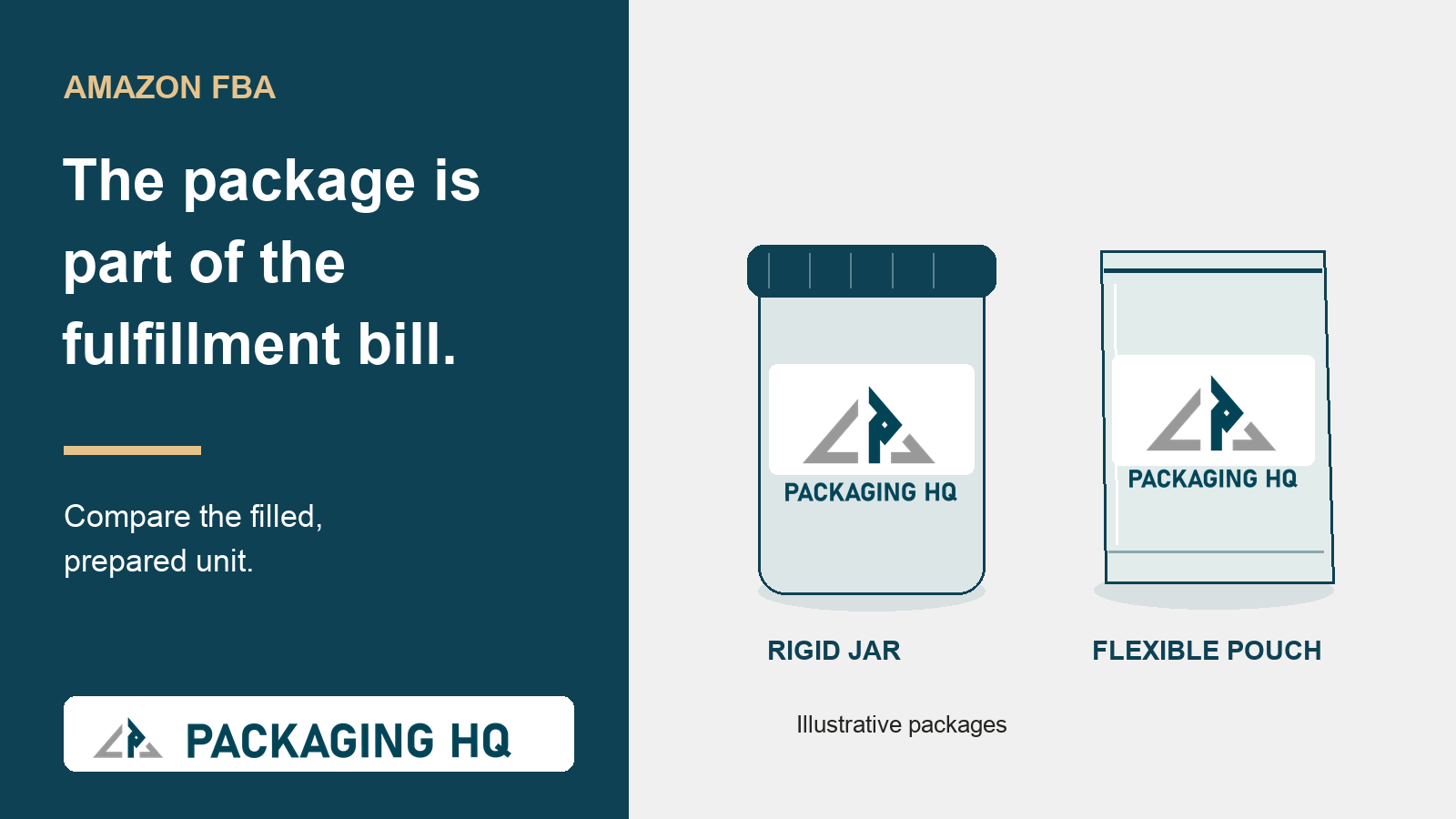
Packaging brief archive
Keep earlier packaging guidance within reach.
Review the complete collection of Packaging HQ regulatory and technical briefs.
 PAPER-BASED FLEXIBLE PACKAGING
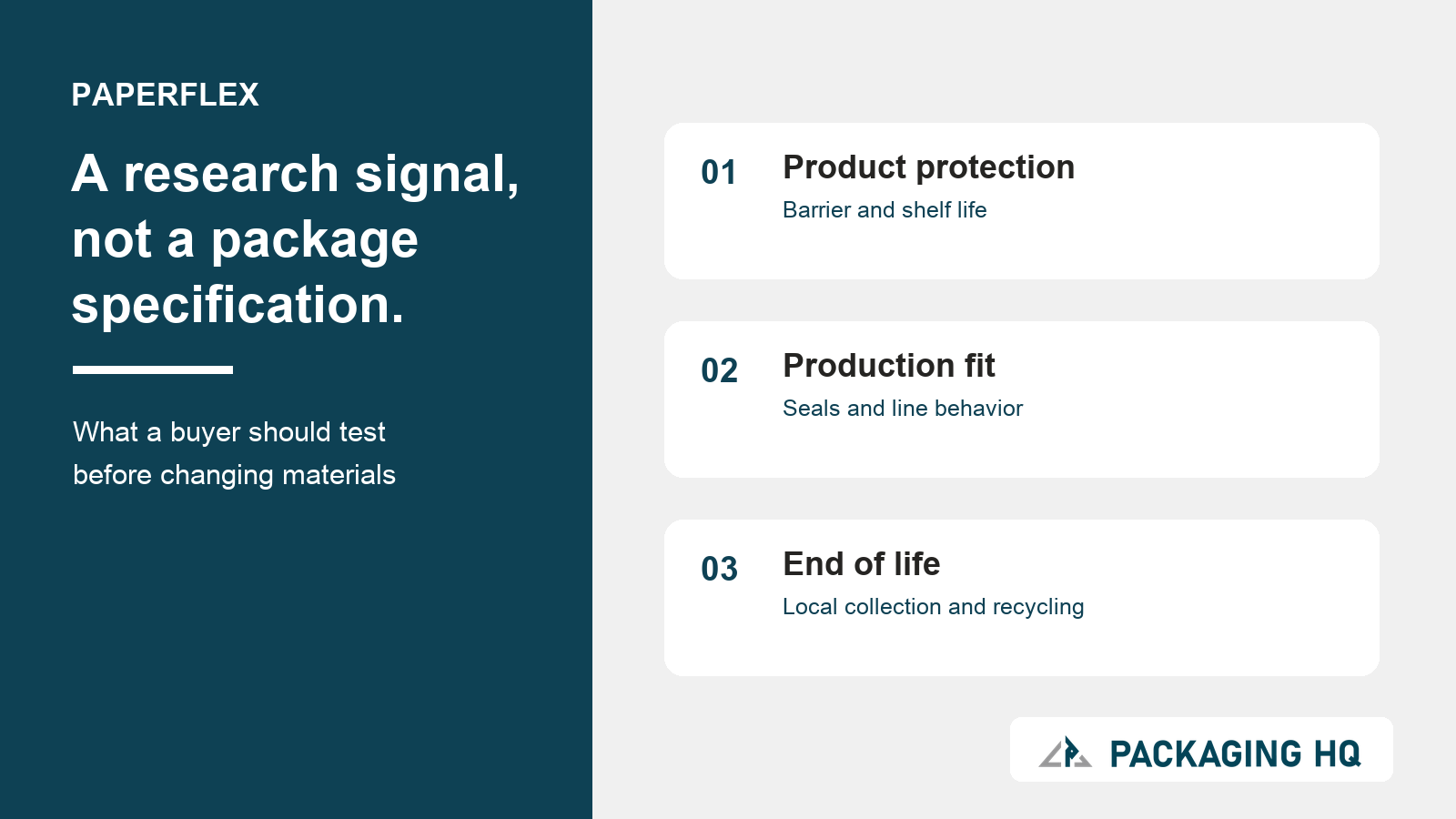
Paper-Based Flexible Packaging: What PaperFlex Means for Buyers
Six global brands are funding work on paper-based flexible packaging. Buyers still need to test product protection, line performance, and a credible local recovery path before changing a working package.
Read the article ↗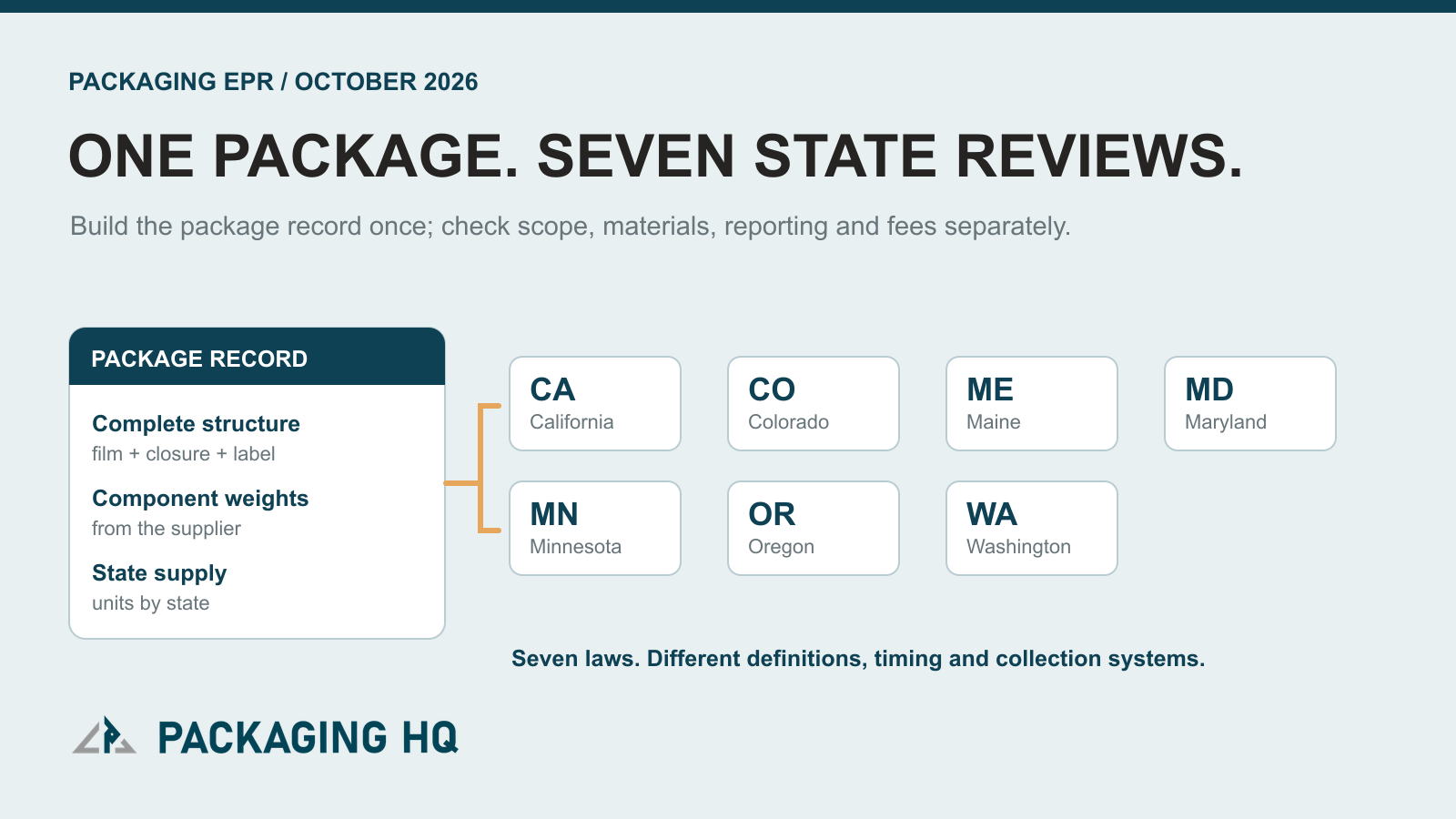 PACKAGING EPR AND REGULATIONS
Seven Packaging EPR States: What Brands Need to Check in Each One
Seven states have packaging extended producer responsibility laws, but their scope, deadlines, and fees differ. Start with an accurate record of the complete package, then check each state separately.
Read the article ↗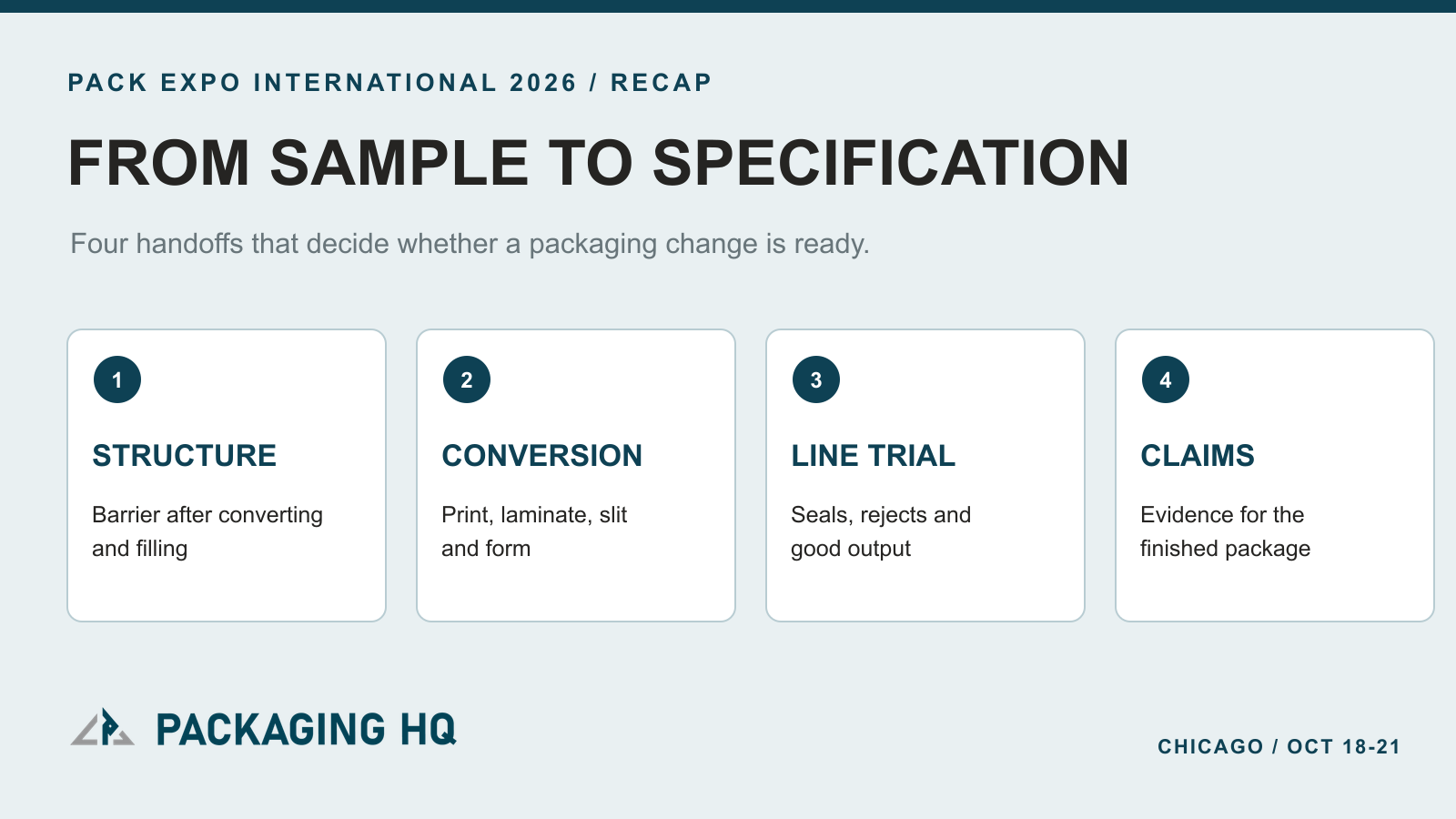 FLEXIBLE PACKAGING AND EVENTS
PACK EXPO 2026 Recap: What Flexible Packaging Buyers Should Test Next
PACK EXPO International 2026 showed promising barriers, package formats, and line controls. The useful next step is to compare the complete package and production result with what a buyer uses today.
Read the article ↗ PACKAGING MATERIALS AND PERFORMANCE
Can a Retort Pouch Be Mono-Material? What Brands Need to Prove
PP-based retort pouches are moving from concept to commercial examples. The useful question is whether a candidate construction protects your product, survives your process, runs on your line, and has a credible end-of-life path.
Read the article ↗ FLEXIBLE PACKAGING AND EVENTS
PACK EXPO 2026: What Flexible Packaging Buyers Should Actually Check
PACK EXPO International runs October 18–21 in Chicago. For flexible packaging buyers, the useful agenda is not a list of launches; it is a short set of tests for barrier, whole-pouch design, and performance on the actual filling line.
Read the article ↗ PACKAGING PRODUCTION AND TECHNOLOGY
Where AI Is Actually Cutting Work in Flexible Packaging Production
The most useful AI in flexible packaging is attached to a specific error, delay, or waste stream. Current tools can help check artwork, match color, and sort inspection results, but buyers should ask for measured results on their own jobs.
Read the article ↗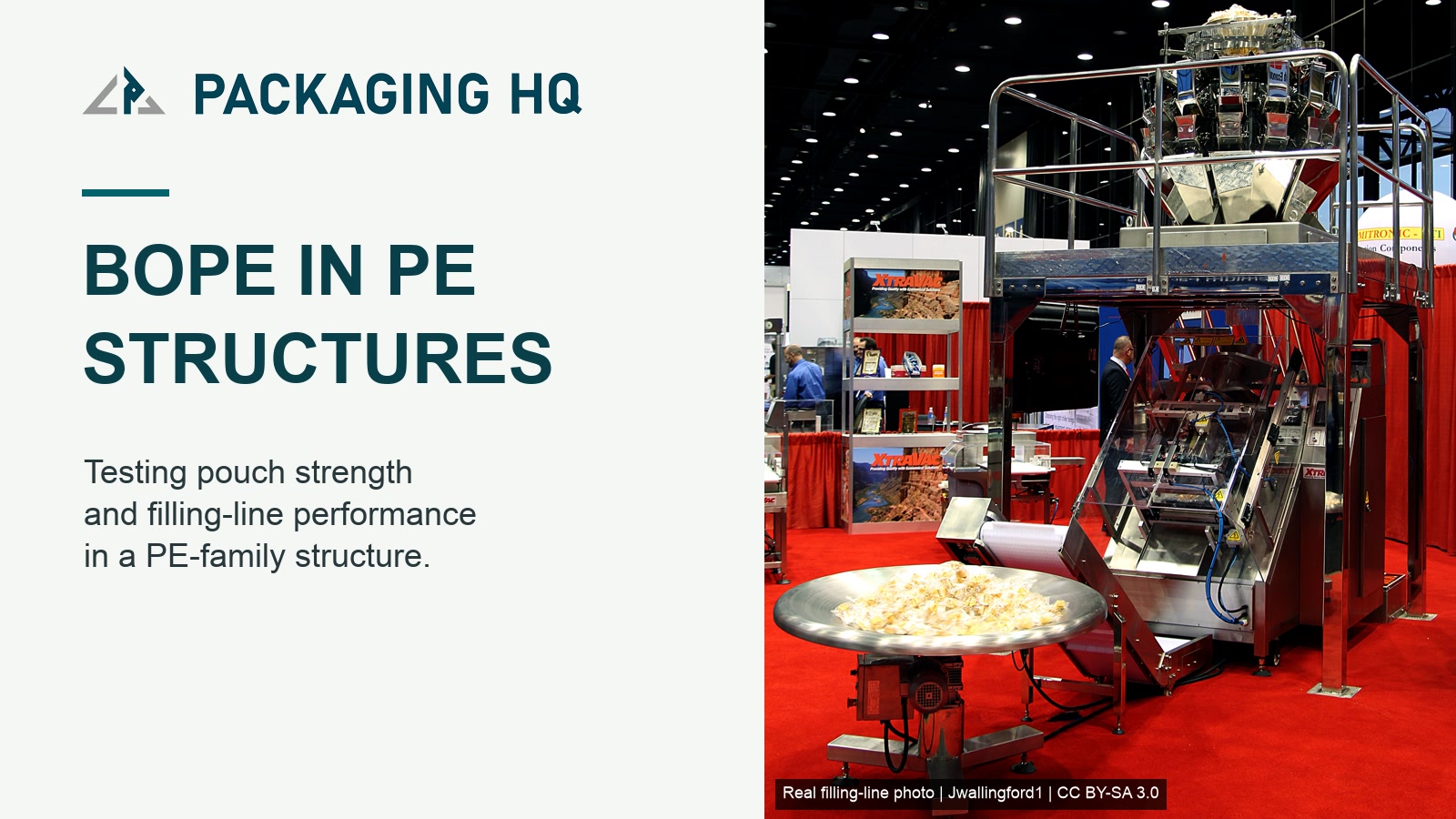 PACKAGING MATERIALS AND PERFORMANCE
Can BOPE Make a PE-Based Pouch Stronger and Easier to Fill?
BOPE can add stiffness and handling strength to the outside of a PE-based pouch or rollstock. The useful question is whether the finished structure runs, seals, and protects the product while meeting the relevant recycling-design criteria.
Read the article ↗ PACKAGING LAW AND COMPLIANCE
FDA Is Reviewing Phthalates in Food Packaging: What Brands Should Ask Suppliers
FDA is taking another look at phthalates used in food-contact materials. That doesn't mean brands need to redesign every package. It does mean supplier paperwork should match the package actually being purchased.
Read the article ↗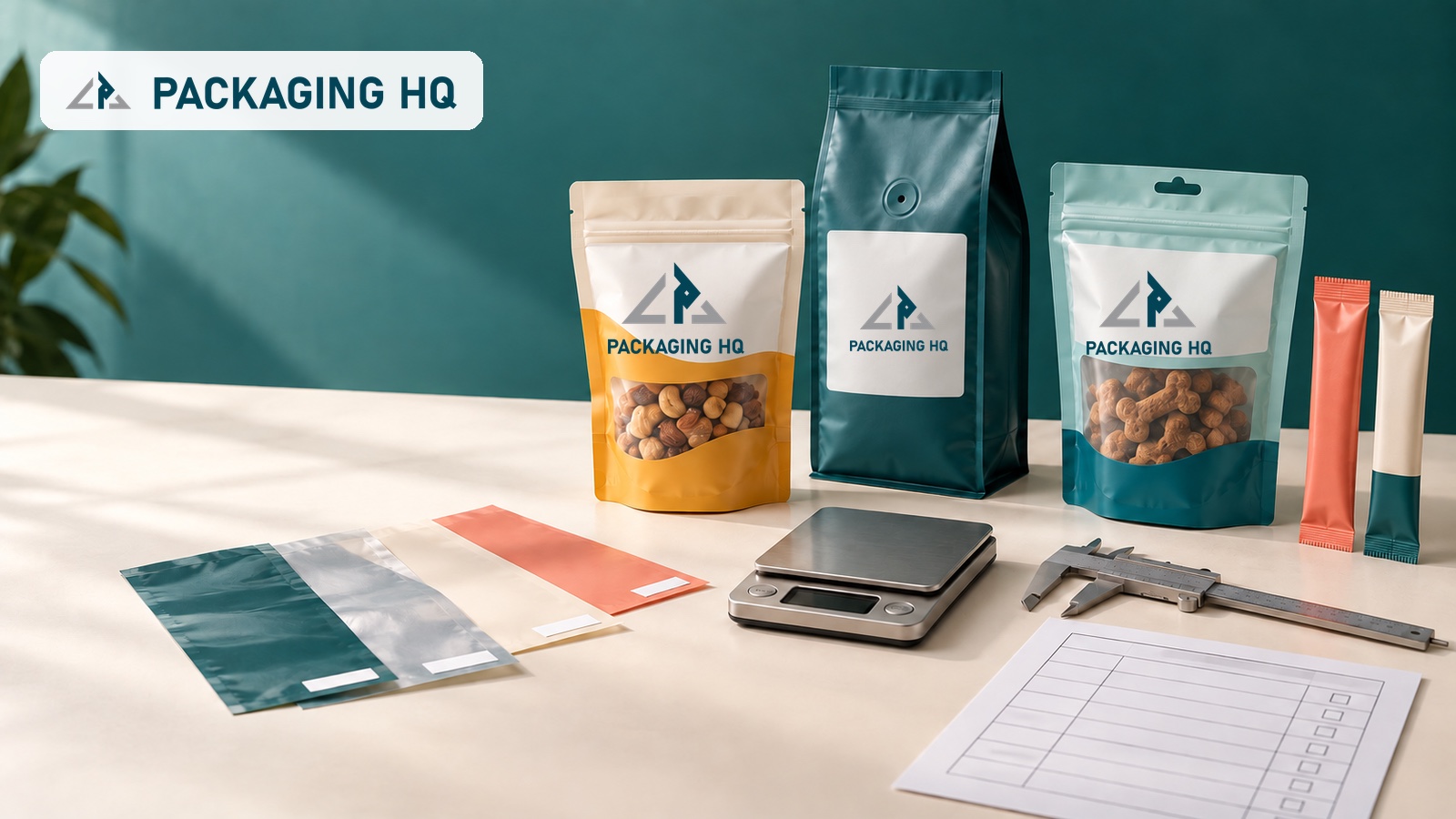 PACKAGING LAW AND COMPLIANCE
California SB 54: What Packaging Data Should Your Brand Collect Now?
California's permanent SB 54 regulations are in effect. Brand owners can prepare by identifying the responsible producer, documenting each package component, and collecting reliable weights and California sales data before changing a working package.
Read the article ↗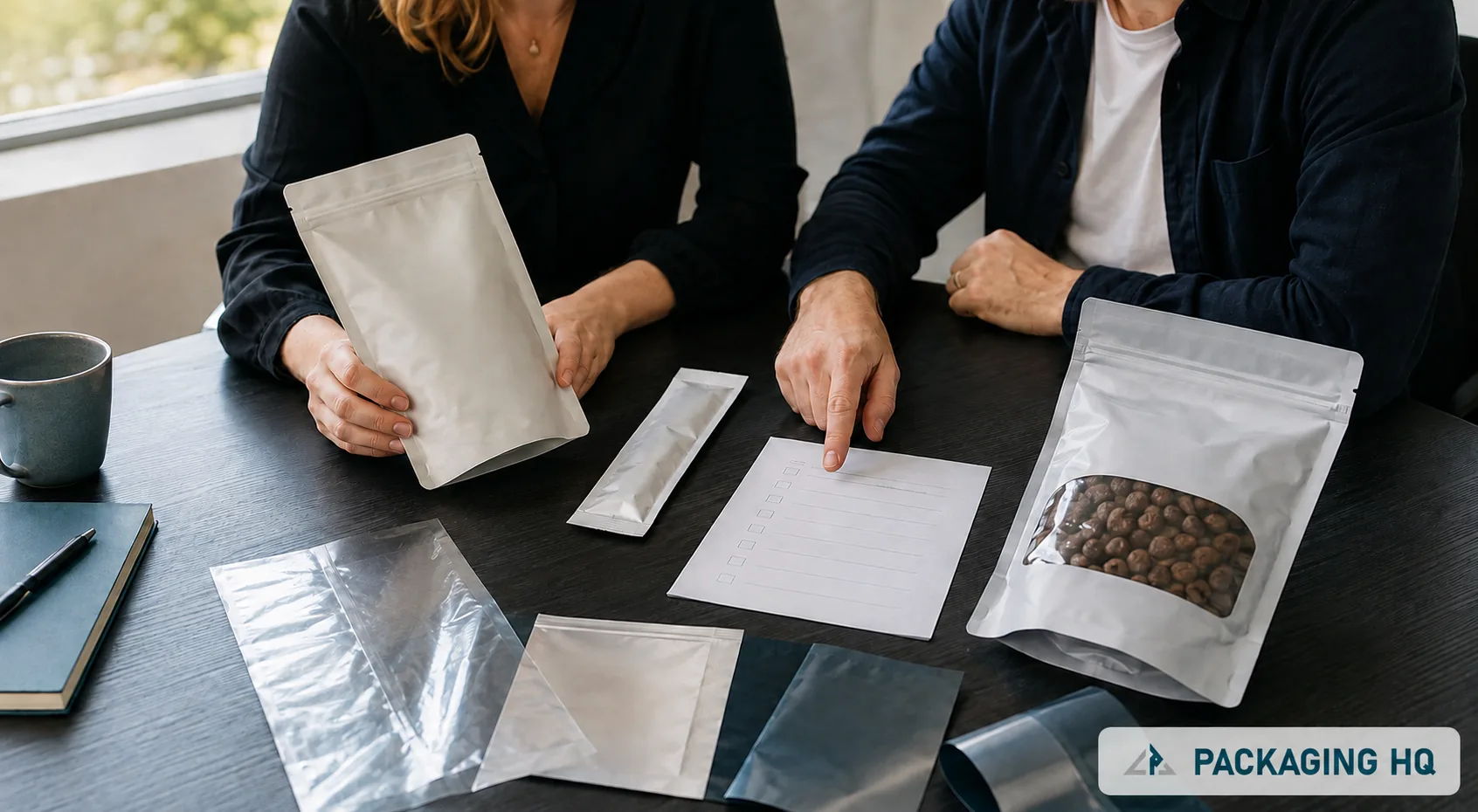 PACKAGING LAW AND COMPLIANCE
Selling in Europe? What the New EU Packaging Rules Mean for Your Brand
New EU packaging rules are now applying, but brands do not need to redesign every pouch overnight. Start by identifying affected products, checking food-contact packaging, and organizing the documents behind each package.
Read the article ↗Experience Behind Packaging HQ
See how the problem was worked through.
Real production stories about print transfer, leaking seals, line performance, rework, and the package decisions that changed the result.
These projects were personally led by Packaging HQ’s founder before Packaging HQ was established. Customer-reported results vary and are not guaranteed.The Film Looked Right. The Ink on the Machine Told a Different Story.
How a reverse-printed high-barrier laminate stopped ink transfer, reduced cleaning downtime, and helped a packaged snack line run faster.
Cleaner production with lower film cost ↗02 / NUTRITION BARSLeakers Had Become Part of the Production Process.
How a nutrition bar producer reduced leakers and rework by designing the sealant around the real conditions on its horizontal flow-wrapping lines.
More than $700,000 in estimated annual labor capacity recovered ↗Practical technical field guides
Use the questions production will eventually ask.
Each guide is built as a working technical reference: decision inputs, common failure paths, a field checklist, and the limits of what can be concluded without application-specific validation.
The Flexible Packaging Specification Guide
How to develop a flexible package from product and production requirements, then document the approved dimensions, materials, graphics, validation, and change controls.
16 minute read ↗POUCHES AND BAGS / 02How to Size a Flexible Pouch
A practical pouch-sizing method based on product density, usable fill area, headspace, filling, seals, closures, presentation, and distribution.
10 minute read ↗ROLL STOCK AND FILMS / 03The Roll Stock Specification Checklist
The material, web, print, roll, sealing, and line-performance details needed to quote, qualify, and supply flexible packaging roll stock.
13 minute read ↗MATERIAL STRUCTURES / 04How Flexible Packaging Film Layers Work Together
A practical guide to the print, barrier, sealant, and mechanical functions within flexible packaging film structures. It also explains why shorthand material names are not complete specifications.
13 minute read ↗FILLING AND MACHINABILITY / 05Filling & Machinability in Flexible Packaging
How flexible packaging film, product behavior, equipment, sealing conditions, roll configuration, and production controls work together on the filling line.
13 minute read ↗MATERIAL STRUCTURES / 06A Guide to Flexible Packaging Lamination Methods
How solvent-based, water-based, solventless, thermal, and extrusion lamination differ. The guide also covers what to evaluate before choosing a process.
16 minute read ↗BARRIER AND SHELF LIFE / 07Barrier and Shelf Life in Flexible Packaging
How to set a barrier target using oxygen, moisture, light, aroma, product sensitivity, seals, package area, and storage conditions.
12 minute read ↗PRINTING AND GRAPHICS / 08Flexible Packaging Printing Methods and Artwork Guide
How digital, gravure, and flexographic printing differ, and how to manage color, artwork, finishes, proofs, and final approval.
14 minute read ↗SUSTAINABILITY / 09A Practical Guide to Sustainable Flexible Packaging
How to evaluate source reduction, mono-material structures, BOPE, recycled content, compostable packaging, format changes, environmental claims, and package validation.
22 minute read ↗TROUBLESHOOTING / 10How to Investigate Flexible Package Seal Failures
A structured method for investigating leakers, weak seals, contamination, wrinkles, hot-tack failures, and intermittent sealing problems.
14 minute read ↗CO-MANUFACTURING / 11The Co-Manufacturer Packaging Handoff
A working checklist for aligning the brand, packaging supplier, and co-manufacturer on equipment, dimensions, materials, trials, approvals, and production supply.
11 minute read ↗Plain-language glossary
Terms you may hear in a flexible packaging conversation.
You do not need to know these before contacting us. This reference is here when the language becomes useful.
COF+
Coefficient of friction. It influences how film slides over machine surfaces and against itself.
Hot tack+
The strength of a seal while it is still hot, before it has cooled to full strength.
OTR+
Oxygen transmission rate measures oxygen moving through a material under defined conditions.
MVTR+
Moisture vapor transmission rate measures water vapor moving through a material under defined conditions.
Seal initiation temperature+
The temperature at which a sealant begins to develop a useful bond under specified time and pressure.
Unwind direction+
The orientation in which printed roll stock feeds from the roll into packaging equipment.
Web width & repeat+
The roll width and the distance from one repeated printed design to the next in the machine direction.
Headspace+
The intentional space between the product fill and the package closure or top seal.
Forming web+
A bottom web designed to be heated and drawn into cavities before filling and sealing to a top web.
Sealant layer+
The inner material layer selected to bond under heat and pressure and, often, contact the product.
Full technical library
Barrier & Shelf Life↗Material Structures↗Filling & Machinability↗Package Development↗Mockups & Prototypes↗Printing & Graphics↗Sustainability↗Troubleshooting↗Working With Your Co-Manufacturer↗Let’s solve it together
Have a question the library does not answer?
We’ll help define what the package needs to do, who needs to be involved, and what should happen next.