

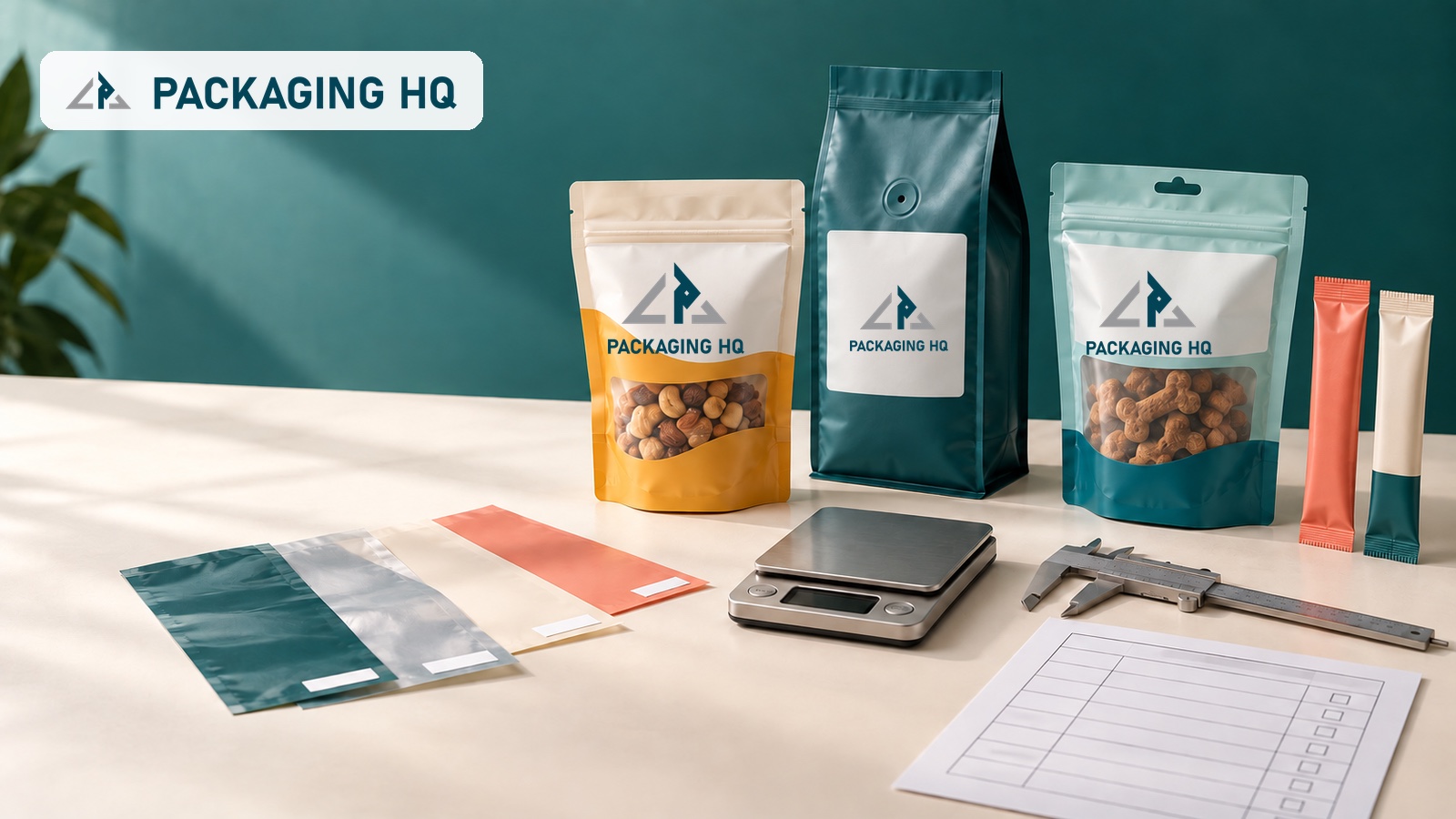
If your company sells a snack pouch, coffee bag, pet-treat package, or supplement carton in California, the first useful SB 54 project may be much simpler than a package redesign.
Build a reliable packaging data file.
California's permanent regulations for Senate Bill 54 took effect on May 1, 2026. The law creates an extended producer responsibility program, often shortened to EPR, for single-use packaging and plastic food service ware. In plain language, businesses that meet the law's definition of a producer will help fund and manage what happens to covered packaging after it is used. 1
CalRecycle published updated source-reduction guidance on August 4, 2026. It shows why brands need more than a supplier invoice or a finished pouch sample. Reporting can involve both the number of plastic components and the total weight of plastic sold, offered for sale, or distributed in California. 2
That does not mean a brand owner should start counting adhesive molecules or choosing a new film today. It means the company should know what it sells, which packaging goes with it, and who can provide dependable technical information.
It also creates a cost question. SB 54 places program funding obligations on producers, and Circular Action Alliance's current draft fee-setting plan describes producer fees based on program costs, supplied material weight, and material-specific cost factors. The final amount for any one brand will depend on the approved program and the brand's actual packaging data. 1 3
Packaging HQ can help a brand look for avoidable packaging cost while building a cleaner data record. That can include confirming the exact pouch or rollstock specification being purchased, matching it to the correct finished product, identifying missing supplier information, and reviewing whether gauge, dimensions, features, order quantities, or sourcing options deserve a closer look. Any change still needs to meet product protection, shelf-life, sealing, production, and distribution requirements.
01
What changed in 2026
The permanent regulations are now effective. CalRecycle's producer guidance says producers must apply to participate in the approved producer responsibility organization plan, submit an independent producer application, or obtain a small-producer exemption. 4
Circular Action Alliance is California's approved producer responsibility organization, commonly called the PRO. CalRecycle says CAA can manage registration, reporting, and certain exemption or exclusion submissions for participating producers. Producers that choose to report for themselves use CalRecycle's PEPRS reporting system. 1 4
The small-producer exemption is not automatic. CalRecycle says a producer with less than $1 million in annual gross sales may apply, but it must first register and provide supporting information. Companies near that threshold should confirm the current requirements rather than assuming they are outside the program. 5 8
02
The first question is: Are you the producer?
The word producer does not always mean the company that made the pouch or filled the product.
CalRecycle's May 2026 screening tool looks at factors such as who manufactured the packaged good, who owns the trademark, whether the relevant party is in California, licensing arrangements, and who first sold, offered for sale, or distributed the good in or into the state. 6
For a growing brand, the answer may depend on how products reach California. The brand may sell directly from its own website, ship through a distributor, license a trademark, or use a co-manufacturer that buys the packaging. Those commercial arrangements can affect the result.
Do not settle this question through a casual email chain. Ask the person responsible for compliance, the company's legal advisor, or Circular Action Alliance to review the actual sales structure. Then record the conclusion and the facts supporting it. CalRecycle notes that its screening tool is informational and that specific factual situations are handled case by case. 6
03
Build a record for every package you sell
Start with a spreadsheet. Each group of rows should represent a specific finished package used for a product sold in California, with one row for each packaging component. Download the Packaging HQ SB 54 Packaging Data Template to organize the work by SKU, package level, component, weight, supplier, revision, and source document.
For example, a coffee brand might use the same printed bag for two roasts but apply different labels. A supplement brand might sell a carton containing 30 individually wrapped stick packs. A pet-treat company might ship a pouch inside a corrugated case sealed with plastic tape.
Those are packaging systems, not just individual pouches.
CalRecycle's covered-material guidance says packaging can include primary packaging closest to the product, secondary packaging used for grouping or display, and tertiary packaging used for transport. Examples of secondary and tertiary packaging include corrugated boxes, shrink wrap, plastic tape, and air pillows. Some packaging is excluded from the law, so the finished inventory should be reviewed before anything is classified. 7
For each row, collect:
- Product name and SKU
- California sales channel
- Package level, format, and finished size
- Packaging component, including closures, labels, valves, overwrap, cartons, cases, and tape where applicable
- Material description for the component
- Total component weight and the plastic portion when known
- Supplier, converter, and manufacturing location
- Annual units sold, offered for sale, or distributed in California
- Current specification, drawing, artwork version, and supporting source document
If one field is unknown, mark it as unknown and assign an owner. An honest gap is easier to fix than a confident guess.
04
Why component count and weight both matter
CalRecycle's August source-reduction guidance identifies two required metrics for plastic covered material: the number of plastic components and the total weight of plastic sold, offered for sale, or distributed in the state. For a package made from plastic and nonplastic material, the reported plastic weight excludes the nonplastic portion. 2
The guidance also explains that a multilayer plastic pouch can count as one plastic component when its layers form one nondetachable grouping with a consistent composition and function. A separate plastic pour spout would add another component. 2
That matters for flexible packaging. A printed stand-up pouch may look like one item to a shopper while also having a zipper, valve, label, window, coating, ink, or adhesive that needs to be understood. CalRecycle lists these among its examples of plastic components, although the treatment of a specific package still depends on the facts and current rules. 2
A brand owner does not need to determine the final regulatory treatment of each part alone. The practical job is to collect enough reliable information for the appropriate technical and compliance people to make that determination.
05
Use packaging accuracy to control cost
Accurate data supports more than reporting. It helps a brand see whether it is buying the same structure across similar SKUs, paying for an outdated specification, carrying unnecessary size or gauge, or missing a sourcing option. Those are business questions Packaging HQ can help investigate with the converter and co-manufacturer.
The goal is not to make a package lighter at any cost. A lower-cost structure is only useful if it still protects the product, seals reliably, runs on the filling line, survives distribution, and delivers the intended shelf life.
Packaging HQ can verify the packaging actually being used, reconcile specifications with quotes and purchase records, help obtain missing supplier data, and organize a clear package file for the brand's compliance review. Final legal responsibility, exemptions, covered-material classifications, and reporting decisions should be confirmed with Circular Action Alliance, CalRecycle, or qualified counsel.
06
Ask suppliers for numbers tied to the exact package
Request a component breakdown for the finished specification you actually purchase. The response should identify the package, revision, production location, unit of measure, and date.
For weight, ask whether the value is measured or calculated and whether it represents one finished package, 1,000 packages, or a roll. For a structure containing plastic and nonplastic material, ask for the plastic portion needed for source-reduction reporting. For closures, valves, labels, and other distinct parts, ask for separate component information where applicable. 2
Do not combine data from a sales estimate, an old drawing, and a similar package unless the assumptions are clearly documented. A small error repeated across a large sales volume can create a meaningful reporting difference.
Also ask suppliers to notify your company before changing a film layer, coating, ink system, adhesive, zipper, valve, gauge, or manufacturing site. A packaging file is only useful when changes reach the person maintaining it.
07
What not to do
Do not replace a working package simply because a different structure sounds easier to report. The package still has to protect the product, seal reliably, run on the filling line, survive distribution, and deliver the intended shelf life.
Do not assume a recyclable claim answers every SB 54 question. The program includes reporting, source reduction, recyclability or compostability goals, recycling-rate goals, and producer funding. 4
Do not assume your co-manufacturer owns the data because it buys the film. The brand may still need access to supplier specifications, component weights, and California sales information.
Finally, do not wait for a perfect software system. A controlled spreadsheet with named owners and source documents is a sound place to begin.
08
A practical next step
Pick the ten California SKUs with the highest sales volume. Map the complete packaging system for each one, including the package touching the product and the materials used for grouping and shipping. Then send the missing-data list to the appropriate packaging suppliers and co-manufacturers.
If your packaging information is spread across quotes, old drawings, and vendor emails, talk with Packaging HQ. We can help confirm what you are buying, find potential cost opportunities, organize supplier inputs, and build a package file that supports informed compliance and sourcing decisions.
Start a packaging data and cost review: https://packaginghq.com/contact?topic=sustainability
FREQUENTLY ASKED QUESTIONS
Common questions about California SB 54
Does California SB 54 apply to a brand located outside California?+
It may. Producer status depends on the business arrangement and how the packaged good is sold, offered for sale, or distributed in or into California. Use CalRecycle's producer screening tool and confirm the result for your facts. 6
Is the packaging converter automatically the producer?+
No. The definition does not simply point to the company that made the packaging. Manufacturing, trademark ownership, California presence, licensing, and who first sells, offers for sale, or distributes the packaged good in or into the state can affect the result. 6
What should I request from a flexible-packaging supplier?+
Ask for the exact finished specification, component list, material descriptions, unit weights, plastic weight where needed, manufacturing location, revision date, and change-notification process.
Is the $1 million small-producer threshold based on California sales or total worldwide sales?+
CalRecycle's PEPRS application guidance asks for total gross annual sales in California, based on the most recent calendar year's tax returns. It also asks applicants to provide proof of those California sales. The exemption is not automatic. A producer must first register and submit an application, and it should confirm its eligibility using the current rules and its own facts. 5 8
Does an approved small-producer exemption remove every SB 54 obligation?+
No. CalRecycle describes the exemption as covering most reporting and fee requirements and says small producers still need to plan for the requirement that covered packaging sold in California be recyclable or compostable by 2032. Confirm the exact scope and duration of any exemption granted to your company. 5
Should we redesign our pouch now?+
Not based on reporting pressure alone. First identify your obligations and data gaps. Any new structure should still be qualified for product protection, sealing, filling performance, shelf life, distribution, and customer use.
SOURCES
CalRecycle, SB 54 Plastic Pollution Prevention and Packaging Producer Responsibility Act↗CalRecycle, Source Reduction Reporting Guidance, published August 4, 2026↗Circular Action Alliance, California Program Plan, Chapter 9: Fee-Setting, revised June 18, 2026↗CalRecycle, Producer Guidance↗CalRecycle, Extensions, Exemptions, and Exclusions↗CalRecycle, Are You a Producer? A situational screening tool, May 2026↗CalRecycle, Identifying Covered Materials, published May 11, 2026↗CalRecycle, PEPRS Guidance on Registration and Application Submittals↗