Confectionery

Packaging built around the confection, the production line, and the selling season

From cold-seal films for chocolate and high-speed wrapping to stand-up pouches, printed roll stock, and specialty formats, Packaging HQ helps develop packaging around the product and the way it is produced.

Chocolate, gummies, hard candy, caramels, chews, and seasonal programs each create different packaging needs. We help bring together product protection, line performance, shelf appearance, production timing, and the people responsible for making it work.

Schedule a Call ↗
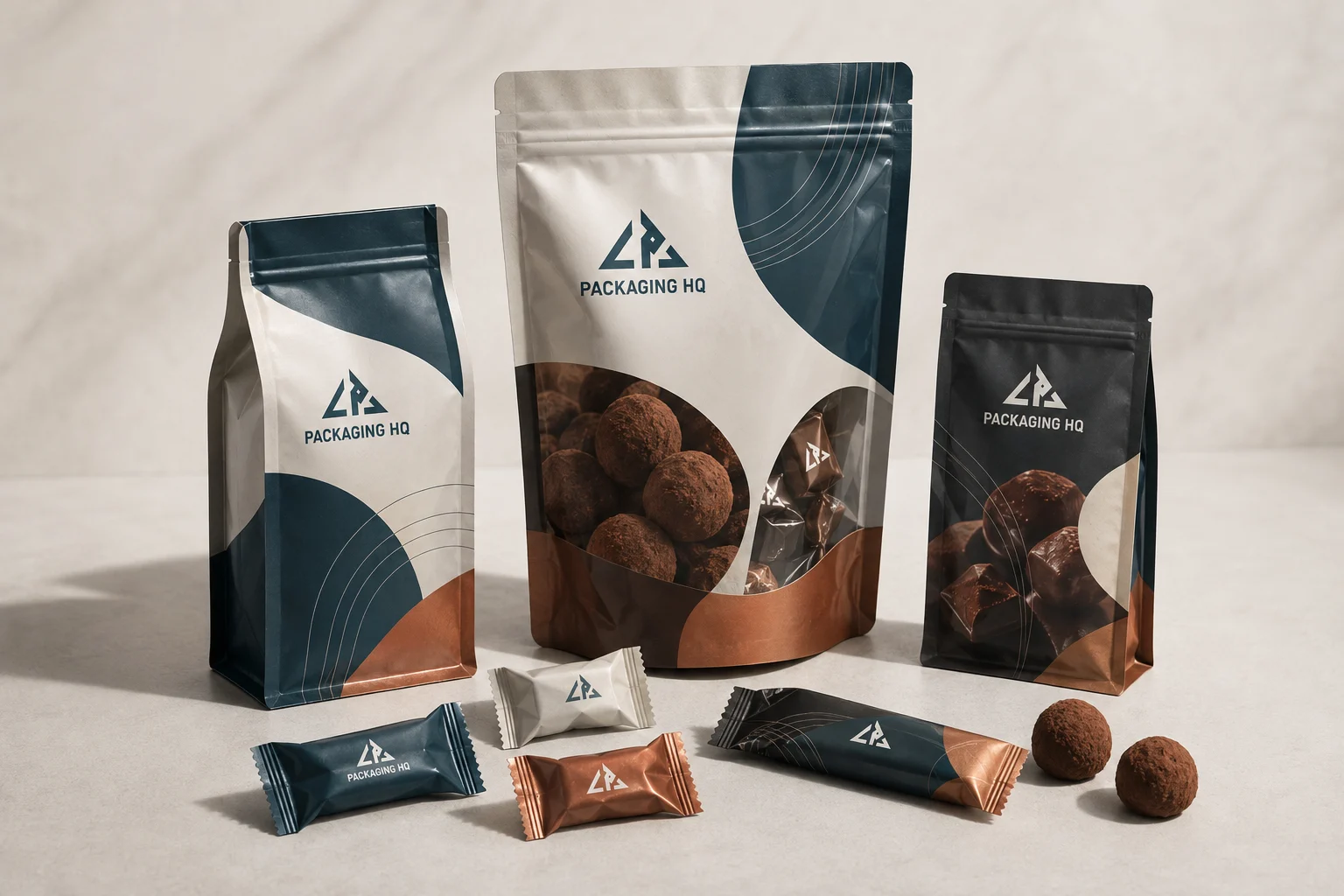
Packaging HQ branded chocolate pouches and individually wrapped confections
Confectionery

Pouches and individual wraps can support premium presentation, seasonal programs, and high-speed production. Each package is developed around the confection, wrapping process, timing, and shelf presentation.

Packaging formats

Start with the format that fits the confection and wrapping process.

The product, wrapping method, selling season, and shelf presentation help define the best place to begin.

02

Stand-up and specialty pouches

Stand-up pouches work well for gummies, candy, chocolate pieces, baking inclusions, and multi-serving products. The pouch should be sized with the actual product because shape, density, settling, headspace, zipper placement, and filling method affect the required dimensions.

Specialty pouches can combine paper texture, foil or metallic details, and clear windows. This style can create a premium presentation for truffles, wrapped chocolates, giftable products, and seasonal programs.

Explore this packaging path
03

Printed roll stock

Printed roll stock can be formed into pillow bags, fin-seal packages, and other confectionery formats on vertical or horizontal equipment.

The film must match the product and the production line, including the dimensions, roll setup, sealing method, and print layout.

Explore this packaging path
04

Single-serve and specialty films

Lay-flat and 3-side-seal pouches can support samples, single servings, limited editions, and seasonal products.

Twist-wrap, overwrap, and specialty films can be developed for hard candy, mints, caramels, chews, taffy, and individually wrapped pieces.

Explore this packaging path

Product requirements

Different confections create different packaging needs.

01 / CHOCOLATE

Manage the product and its environment.

Chocolate packaging may need to manage oxygen, moisture, aroma, grease, light, and outside odors, depending on the product and distribution conditions. Temperature control remains important because packaging cannot prevent quality changes caused by improper storage or heat exposure.

The film should also release cleanly from the chocolate, maintain its appearance, and seal reliably without damaging a heat-sensitive product.

02 / GUMMIES AND FRUIT SNACKS

Control moisture movement around the formulation.

Gummy packaging must account for the product's moisture level, tendency to gain or lose moisture, oils, acids, flavors, coatings, and sensitivity to heat.

The wrong moisture transmission can allow gummies to dry, harden, soften, or become sticky. Product compatibility, seal contamination, pouch sizing, zipper performance, storage temperature, and the intended quality period should be reviewed with the actual formulation.

03 / HARD CANDY AND MINTS

Keep the intended texture, flavor, and wrap.

Hard candy and mints commonly need moisture protection to reduce sticking, surface changes, and loss of the intended texture. Flavor and aroma retention may also matter, especially for mint and strongly flavored products.

Individually wrapped pieces can add requirements for twist retention, dead fold, release, cutting, and high-speed wrapping. Sharp pieces and broken candy can also create puncture or abrasion risks.

04 / CARAMELS, CHEWS, AND TAFFY

Plan for release and high-speed wrapping.

Caramels, chews, and taffy can stick to the wrapper or leave oils and product residue on the material. Release performance, grease resistance, product compatibility, twist retention or seal performance, and behavior at different storage temperatures are important.

High-speed wrapping also places tight requirements on film consistency, cutting, registration, stiffness, and unwind performance.

Seasonal programs

Holiday packaging starts long before the holiday.

Confectionery demand often peaks around Halloween, Easter, Christmas, Valentine's Day, and other promotional periods. Packaging must be approved, produced, filled, and delivered within a fixed selling window.

Holiday production may begin six to nine months before the season so the manufacturer can build enough finished inventory for the expected demand. Packaging planning needs to begin even earlier.

Film specifications, forecasts, artwork counts, order quantities, print approvals, production capacity, filling schedules, and delivery dates should be planned backward from the retailer or launch deadline.

Shelf appearance

Create a distinctive package without losing sight of performance.

01 / PRINT AND FINISH

Build the look with the package.

Confectionery packaging often depends on bold color, metallic details, windows, and finishes to stand out. These visual choices need to work with the film and printing process so colors remain consistent and graphics line up correctly across every flavor or holiday design.

Package size, seals, folds, and print layout should be settled before final artwork to avoid changes and delays.

02 / DE-METALLIZED FILM

Use clear and metallic areas together.

De-metallized film can create clear windows, patterns, or graphic details within a metallic-looking package. It can give candy and other snack products a distinctive shelf appearance while allowing selected areas of the product to remain visible.

Removing the metal changes the light and barrier performance in those areas, so the complete film structure still needs to be selected around the product and required protection.

Shelf and brand experience

Make the package as considered as the confection inside.

Confectionery brands can use pouch shape, color, metallic and de-metallized details, windows, paper and foil combinations, tactile finishes, and seasonal graphics to create a distinctive shelf presence. The design still has to fit the wrapper or pouch, print method, seals, filling process, and production calendar.

Packaging HQ can work with your existing design team or help you find a design partner. We connect the creative direction with the package format, accurate dimensions, film structure, printing method, finishes, closures, and production requirements.

Bringing packaging into the process before artwork is finalized gives designers accurate panels and dielines while accounting for seals, folds, gussets, zippers, valves, windows, and other features.

Explore printing and graphics

Primary and secondary packaging

Give each part of the package a clear job.

An individual wrapper may provide the product-contact seal, release, and barrier for each piece. An outer pouch or bag can then provide grouping, branding, variety-pack organization, and additional protection.

The outer package does not automatically need the same barrier as the individual wrappers. Reviewing the complete packaging system can prevent unnecessary material while making sure each layer performs its intended function.

A paper-based cold-seal option

Cold seal can also be used with qualified barrier-paper structures. This approach is used for some chocolate applications in Europe and can support a brand's effort to reduce plastic or move toward a paper-based package. The paper, barrier coating, cold-seal adhesive, release coating, print, and production process must work as a complete structure. Environmental claims should be confirmed for the finished package and the markets where it will be sold.

Development partnership

Bring the confection, production line, and seasonal plan together.

A current film specification, roll label, package sample, artwork, or production issue can provide a useful starting point. A production trial is recommended for new or redesigned packaging before moving to full production volume.

01

The brand

The brand brings the product, customer experience, graphics, seasonal calendar, volume forecast, and commercial goals.

02

The production team

The production team or co-manufacturer brings the equipment, wrapping or filling method, sealing process, package dimensions, roll requirements, production schedule, and operating experience.

03

Packaging HQ

Packaging HQ brings those requirements together and helps develop packaging that supports the product, runs consistently, and arrives in time for production. With the brand's approval, we can work directly with the co-manufacturer.

Experience Behind Packaging HQ

Packaged snack / Horizontal flow wrap

The package looked right. Production exposed the problem.

A packaged-snack producer had a laminated barrier film that delivered the appearance and protection the product needed. The graphics were printed on the outside surface, where the ink contacted the horizontal packaging equipment.

Ink transferred onto belts and cutting components and accumulated on the sealing jaws. Operators stopped repeatedly for cleaning, with approximately two additional hours of downtime each week.

The experience behind Packaging HQ led to a reverse-printed high-barrier laminate that protected the ink inside the film structure. The redesigned film stopped the ink transfer, kept the sealing jaws cleaner, maintained the required barrier and seal performance, and allowed the machine to run faster.

15%Approximate reduction in film cost
2 hoursCustomer-reported weekly cleanup time recovered
FasterCustomer-reported improvement in attainable line speed

This project was personally led by Packaging HQ’s founder before Packaging HQ was established. Customer-reported results vary and are not guaranteed.

Read the complete print and production case study

Confectionery packaging questions

Questions about wraps, pouches, cold seal, and timing.

What packaging works best for chocolate?01

The answer depends on the chocolate, product format, wrapping equipment, storage, distribution, and selling environment. Film or paper structures may need to manage moisture, oxygen, aroma, grease, light, outside odors, release, and sealing.

When is cold seal used for confectionery packaging?02

Cold seal is commonly used for heat-sensitive products such as chocolate and for some very high-speed wrapping applications. The package is sealed using pressure instead of heat at the sealing jaws.

How should a confectionery pouch be sized?03

Use the actual product whenever possible. Gummies, wrapped candy, chocolate pieces, hard candy, and baking inclusions can occupy very different volumes at the same weight. Product shape, settling, headspace, filling method, zipper location, and top-seal area affect the dimensions.

Do all gummies need the same moisture barrier?04

No. Formulation, moisture level, coatings, oils, acids, flavors, storage, and the intended quality period can change the package requirements. The goal may be to limit moisture gain, moisture loss, or both.

Does an outer pouch need the same barrier as each individual wrapper?05

Not always. If the individual wrapper provides the product-contact seal and required barrier, the outer pouch may primarily provide grouping, branding, and physical protection.

How early should holiday packaging be ordered?06

Holiday production may begin six to nine months before the selling season. Specifications, forecasts, artwork, approvals, production capacity, and delivery schedules should be reviewed well before manufacturing begins.

Can a confectionery pouch combine paper, foil, and a window?07

Yes. Specialty constructions can combine paper texture, metallic or foil details, and clear windows. The materials and window placement must work with the pouch construction, seals, graphics, product protection, and filling process.

What is de-metallized packaging film?08

De-metallized film uses selected clear areas, patterns, or graphics within a metallic-looking film. It can create a distinctive appearance and allow the product to remain visible. The clear areas change light and barrier performance, so the complete structure must still fit the product.

Can Packaging HQ work directly with our confectionery manufacturer?09

Yes. With the brand's approval, Packaging HQ can work with the co-manufacturer or production team to confirm packaging and production requirements before an order is placed.

Continue the project

Related confectionery packaging topics.

Let’s solve it together

Have a confectionery package to quote or a seasonal program to plan?

Send the known specification or tell us about the confection, wrapping process, co-manufacturer, volume, seasonal deadline, and desired shelf appearance. A Packaging HQ expert will help identify what is still needed.