

Evaluating toughness only at room temperature
Packaging format
Frozen Food Films
Frozen applications can expose packaging to brittle failure, abrasion, moisture, temperature cycling and challenging sealing conditions. The right structure depends on the product, line, freezer environment and distribution hazards.
PROJECT FOCUSFreezer performance includes impact, flexing, moisture and the seal.
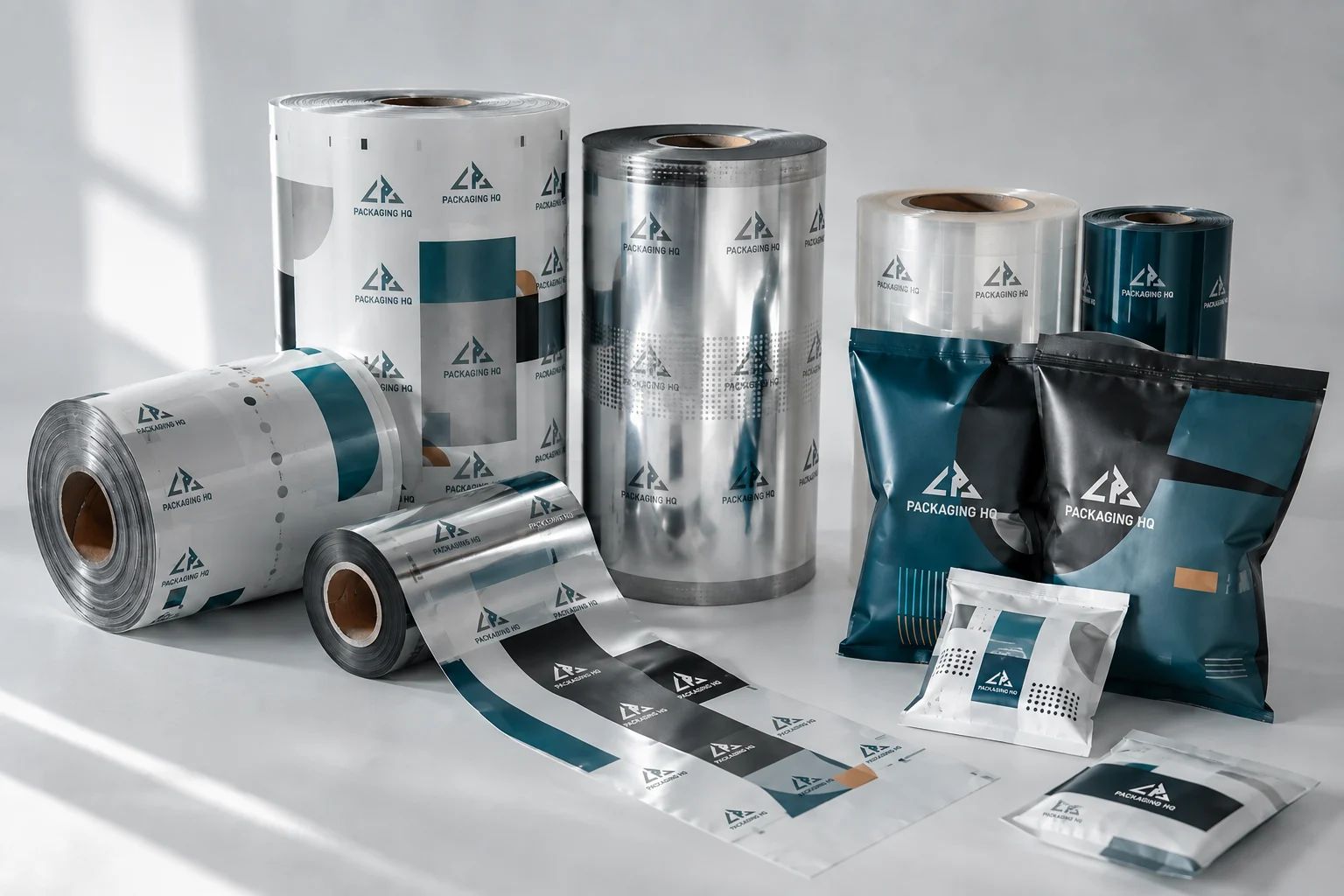
Web dimensions, film layers, print, seals, and roll requirements are developed around the application and filling line.
What the specification must resolve
What to confirm before production.
Films can become less forgiving at low temperature, while frost and product contamination challenge sealing. Product shape, drop hazards, temperature cycling and print exposure help determine whether a monolayer or laminate is appropriate.
Key considerations
- Low-temperature impact and flex
- Seal response with frost or contamination
- Opacity, gloss and surface print protection
- Freezer burn and moisture management
Common applications
- Frozen meals
- Vegetables
- Bakery
- Specialty frozen foods
Where projects go off track
Confirm these details early.
Ignoring sharp product edges and case abrasion
Assuming all frozen products need the same moisture barrier
01Product, fill and performance target
02Filling line, dimensions and material inputs
03Samples, trials, graphics and final approval
A common question
Do frozen foods always require laminated film?
No. Some applications are well served by surface-printed PE or another non-laminated film. Product protection, line behavior and distribution testing should decide.
Continue the project
Connected packaging decisions
Let’s solve it together
Ready to discuss Frozen Food Films?
Share the product, production details, and decisions you already have. We’ll focus on what is still open.