Food & Snacks

Flexible packaging built around the food and the way it is produced

From stand-up pouches for snacks and jerky to roll stock for pillow bags, specialty meat wrappers, forming and non-forming webs, and dairy lidding materials, Packaging HQ helps connect the product's needs with the package and production process.

Barrier, sealing, product contamination, filling conditions, line performance, storage, and distribution all affect the result. We work with the brand and production team to define what the package needs to do before narrowing the material or format.

Schedule a Call ↗
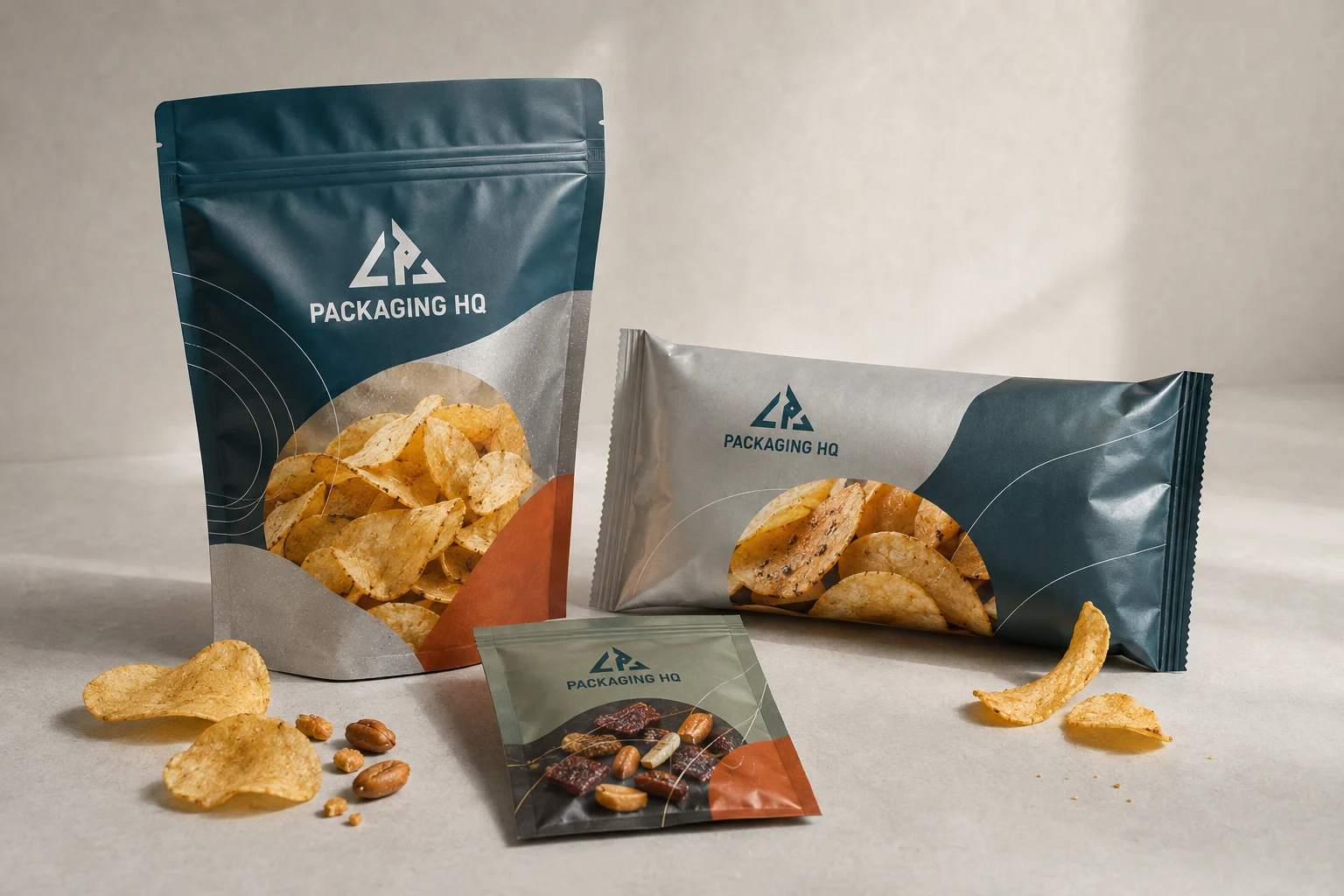
Packaging HQ branded stand-up snack pouch, potato chip pillow bag, and lay-flat snack pouch
Food & Snacks

Stand-up pouches, pillow bags, and lay-flat formats offer different paths for food and snack products. The format, film, print, and seals are developed around the food and line.

Packaging formats

Start with the format that fits the food and the process.

The food, fill process, equipment, use experience, storage, and distribution requirements help define the best place to begin.

02

Roll stock for pillow bags

Roll stock is used to form pillow bags for potato chips, crackers, cookies, bars, baked snacks, and many other food products. The film must match the package and the production line.

Web width, repeat, unwind direction, registration marks, fin or lap seal, friction, stiffness, seal response, and roll configuration all matter. Product drop and contamination in the end seals can also affect package integrity.

De-metallized film can create an ultra-clear product window within a metallic-looking jerky or snack package. For oily products such as jerky, a grease-resistant window can help limit cloudiness. The clear area changes light and barrier performance, so its size and position still need to fit the food.

Explore roll stock for pillow bags
03

Forming and non-forming webs

Thermoformed packages use a forming web to create the cavity and a non-forming web to close the package. The two webs must function as a compatible system.

Draw depth, cavity geometry, product shape, corner thinning, puncture resistance, sealing, and production conditions are important for cheese, meat snacks, portioned foods, and products with sharp or irregular edges.

Explore forming and non-forming webs Explore lidding films
04

Other pouch formats

Lay-flat, 3-side-seal, flat-bottom, side-gusset, quad-seal, spouted, and specialty pouches provide additional options for single servings, larger fills, premium products, liquids, ingredients, and unusual applications.

The format should follow the product, filling process, consumer use, distribution requirements, and desired shelf presentation.

Explore other pouch formats

Cheese and dairy

Dairy packaging needs its own set of decisions.

01 / CHEESE PACKAGING

Different cheeses need different packaging.

Cheese packaging requirements vary by cheese type, moisture level, age, and stage of maturation. Cheddar commonly needs strong oxygen protection and moisture retention to help control mold, oxidation, and drying.

Swiss-style cheeses may require a different approach because gas production can continue after packaging, depending on the product and process. Barrier, headspace, package format, storage temperature, and the point at which the cheese is packaged should be considered together.

Forming and non-forming webs, vacuum pouches, flow-wrap films, and other flexible formats can be developed around blocks, slices, portions, and snack products.

02 / DAIRY LIDDING

The lid and container have to work together.

Packaging HQ supplies lidding materials for sour cream, yogurt, cottage cheese, dips, and other dairy products. The lidding material must be matched to the cup or container.

The lid, seal coating or sealant, container surface, temperature, pressure, and dwell time work together to create the seal. Product on the rim, cold storage, peel experience, puncture resistance, print, and barrier requirements should also be considered.

Explore lidding films

Meat, jerky & salami

Give shoppers a clear view of the product and keep the package working.

Salami wrappers, jerky pouches, and fresh-meat webs solve different jobs. Product visibility has to work alongside grease resistance, barrier, sealing, forming, storage, and production requirements.

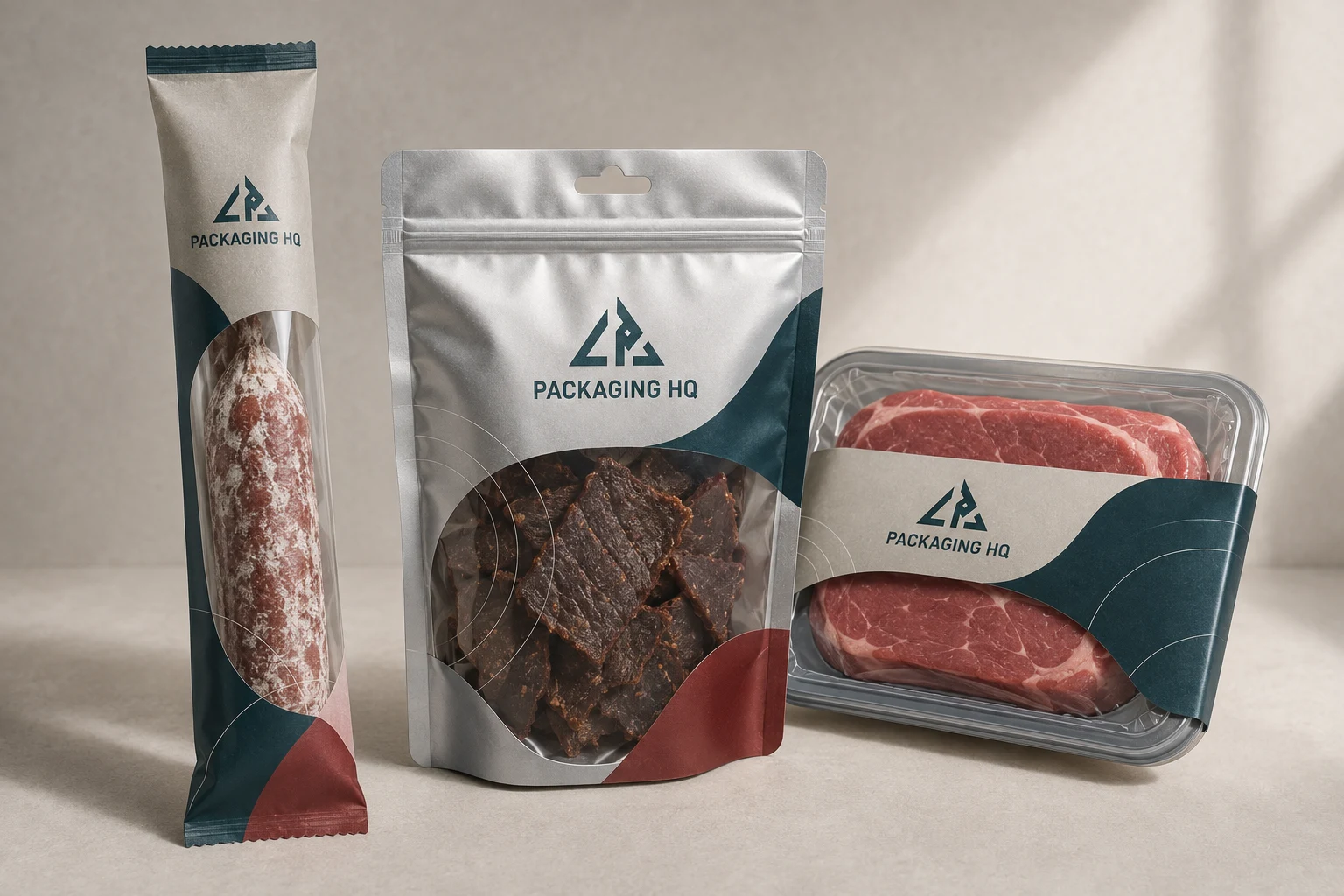
Packaging HQ branded windowed salami wrapper, jerky pouch with an ultra-clear product window, and fresh-meat thermoform package
Meat, Jerky & Salami

Paper-exterior salami wrappers, de-metallized jerky windows, and forming and non-forming webs each connect product presentation with a different production need.

01 / SALAMI WRAPPERS

Paper outside. A clear window where it counts.

Packaging HQ can supply windowed salami wrappers with paper on the exterior and an integrated clear film window. The paper creates a familiar crafted presentation, while the window gives shoppers a direct view of the salami.

The paper, window material, print, grease exposure, and wrapping process need to work together as one package.

Explore specialty flexible packaging
02 / JERKY POUCHES

Make the jerky easier to see.

For jerky, Packaging HQ can de-metallize a selected area of a metallic-looking web to create an ultra-clear product window. A grease-resistant window helps limit the cloudy appearance that can develop when product oils contact standard clear film.

Window size and position can change light and barrier performance. The pouch still needs to fit the jerky, expected shelf life, seals, closure, storage, and distribution.

Explore lay-flat pouches
03 / FRESH MEAT

Build the bottom and top web as a pair.

Fresh cuts, portioned meat, and other refrigerated protein applications can use a forming web to create the package cavity and a compatible non-forming top web to close and seal it.

Draw depth, product shape, corner thinning, puncture resistance, the seal interface, equipment, storage temperature, and distribution should be reviewed together.

Explore forming webs Explore lidding films

Package performance

Food packaging does not have one performance target.

Product behavior, package area, seals, headspace, storage, and distribution all affect the finished package.

01

Barrier based on what the food needs

Potato chips commonly benefit from low oxygen and moisture transmission. Fresh produce may need controlled gas transmission because it continues to respire after packaging. Some baked foods require a balance between retaining moisture and allowing moisture movement to preserve the intended texture. The correct target may be strong barrier or controlled transmission.

02

Seals designed for real filling conditions

Crumbs, seasoning, powder, salt, oil, and product pieces can enter the seal area. The sealant, package headspace, and filling process should be considered together. Performance should be confirmed with the actual food and production conditions.

03

Film that performs on the line

Two films can share the same nominal gauge, barrier, and general material description while behaving differently in production. Friction, stiffness, curl, winding quality, seal initiation, and hot tack can affect tracking, forming, sealing, and attainable line speed.

04

Strength for handling and distribution

Sharp product edges, heavy fills, drops, case packing, abrasion, and temperature changes can place stress on the package. Puncture resistance, toughness, seal strength, and package geometry should reflect the conditions the food will encounter.

05

Print that survives production and distribution

Surface print, reverse print, ink systems, varnishes, laminations, and finishes should be selected around the package and how it will be handled. Print must remain stable through converting, filling, case packing, shipment, and shelf use.

Shelf and brand experience

Help the package earn attention and make the product easy to understand.

Food and snack brands can use pouch style, color, windows, de-metallized details, matte or gloss contrast, texture, and a clear product family to stand apart. The visual plan should account for barrier, seals, folds, filling, handling, and the way each package will sit on shelf.

Packaging HQ can work with your existing design team or help you find a design partner. We connect the creative direction with the package format, accurate dimensions, film structure, printing method, finishes, closures, and production requirements.

Bringing packaging into the process before artwork is finalized gives designers accurate panels and dielines while accounting for seals, folds, gussets, zippers, valves, windows, and other features.

Explore printing and graphics

Primary and secondary packaging

Sometimes the food depends on more than one package.

A chocolate or snack bar may first be wrapped using a cold-seal film, then placed into an outer pouch with other individually wrapped bars.

Cold seal is often used when heat at the sealing area is undesirable or when the packaging line is designed for high-speed cold-seal operation. The coating bonds under pressure instead of relying on heat at the sealing jaws. Coating placement, release performance, registration, pressure, contamination, and storage conditions can affect the finished seal.

In this example, the individual wrapper may provide the product-contact seal and required barrier. The outer pouch may primarily provide grouping, branding, and additional physical protection. It does not automatically need the same barrier as the individual wrappers.

Launch through scale

Bring the food, production, and packaging requirements together.

A current specification, roll label, package sample, or production issue can provide a useful starting point. For a new or redesigned package, a production trial is recommended before moving to a full production order.

01

The brand

The brand understands the food, customer experience, quality expectations, graphics, volume forecast, and commercial goals.

02

The production team

The production team or co-manufacturer understands the equipment, filling process, sealing conditions, web or pouch requirements, food-handling conditions, and operating limits.

03

Packaging HQ

Packaging HQ brings those requirements together and helps develop a package specification that supports the food and performs consistently in production. With the brand's approval, we can work directly with the co-manufacturer to resolve open specifications.

As the brand grows, Packaging HQ can help plan changes in volume, production method, format, or supplier path while keeping the important package requirements documented and controlled.

Experience Behind Packaging HQ

Packaged snack / Horizontal flow wrap

The package looked right. The ink on the machine told a different story.

A packaged-snack producer had a film that delivered the appearance and barrier the product needed. It also created a recurring problem on the horizontal packaging line.

Ink rubbed onto belts and cutting components as the film moved through the equipment. It accumulated on the sealing jaws, causing repeated cleaning stops and approximately two additional hours of downtime each week.

The experience behind Packaging HQ led to a reverse-printed high-barrier laminate that protected the ink inside the film structure. The new film maintained the required barrier and seal performance, stopped the ink transfer, kept the sealing jaws cleaner, and allowed the machine to run faster.

15%Approximate reduction in film cost
2 hoursCustomer-reported weekly cleanup time recovered
FasterCustomer-reported improvement in attainable line speed

This project was personally led by Packaging HQ’s founder before Packaging HQ was established. Customer-reported results vary and are not guaranteed.

Read the complete print and production case study

Food packaging questions

Questions about food formats, sizing, film, and production.

What is the best flexible packaging for snack foods?01

There is no single structure or format for every snack. Product sensitivity, texture, oils, seasoning, fill method, package size, consumer use, storage, distribution, and production equipment all affect the decision.

How should a stand-up pouch be sized for food?02

Use the actual product whenever possible. Fill weight, density, settling, headspace, filling method, zipper location, top-seal area, gusset behavior, and case packing all affect the required dimensions.

What information is needed to quote printed roll stock?03

Useful information includes the current film specification, web width, repeat, unwind direction, roll requirements, print files, product, filling line, sealing conditions, expected volume, and desired timing. A specification, roll label, or material sample can be uploaded when available.

Do potato-chip bags need both oxygen and moisture barrier?04

Potato chips commonly benefit from low oxygen and moisture transmission because oxygen can affect oils and flavor while moisture can reduce crispness. The appropriate targets depend on the product, package size, headspace, gas flushing process, storage, and distribution.

What is the difference between forming and non-forming webs?05

The forming web creates the package cavity. The non-forming web closes the package and seals to the forming web. The two materials must be compatible with each other, the product, and the packaging equipment.

Can Packaging HQ supply lidding material for dairy products?06

Yes. Packaging HQ can supply lidding materials for sour cream, yogurt, cottage cheese, dips, and other dairy products. The lidding material must be matched to the container and sealing process.

Can a paper cold-seal wrapper be used for chocolate?07

Qualified barrier-paper structures with cold-seal coatings are used for some chocolate applications. The barrier, paper, coatings, print, release behavior, sealing, and production process must be evaluated as a complete package. Environmental claims should be confirmed for the finished structure and the markets where it will be sold.

Can Packaging HQ work directly with our co-manufacturer?08

Yes. With the brand's approval, Packaging HQ can work with the co-manufacturer or production team to confirm package and production requirements before an order is placed.

What is de-metallized snack packaging film?09

De-metallized film creates selected clear windows, patterns, or graphic details within a metallic-looking package. For jerky and other oily foods, a grease-resistant window can help limit the cloudy appearance that product oils may create. The clear areas change light and barrier performance, so the window and complete structure must still fit the product.

What packaging does Packaging HQ offer for salami, jerky, and fresh meat?10

Packaging HQ can supply paper-exterior salami wrappers with an integrated clear window, jerky pouches with de-metallized ultra-clear windows, and compatible forming and non-forming webs for fresh-meat applications. Each package should be developed around the product, production process, required barrier, seals, storage, and distribution.

How can a jerky pouch window remain easier to see?11

Oils from jerky can make a standard clear window appear cloudy. A grease-resistant window can help limit that haze. Window size and position also matter because a clear area can change the package's light and barrier performance.

Continue the project

Related food packaging topics.

Let’s solve it together

Have a food package to quote or a production problem to solve?

Send the known specification or tell us about the food, fill amount, format, filling process, co-manufacturer, expected volume, and timing. A Packaging HQ expert will help identify what is still needed.