What packaging works best for pet treats?01
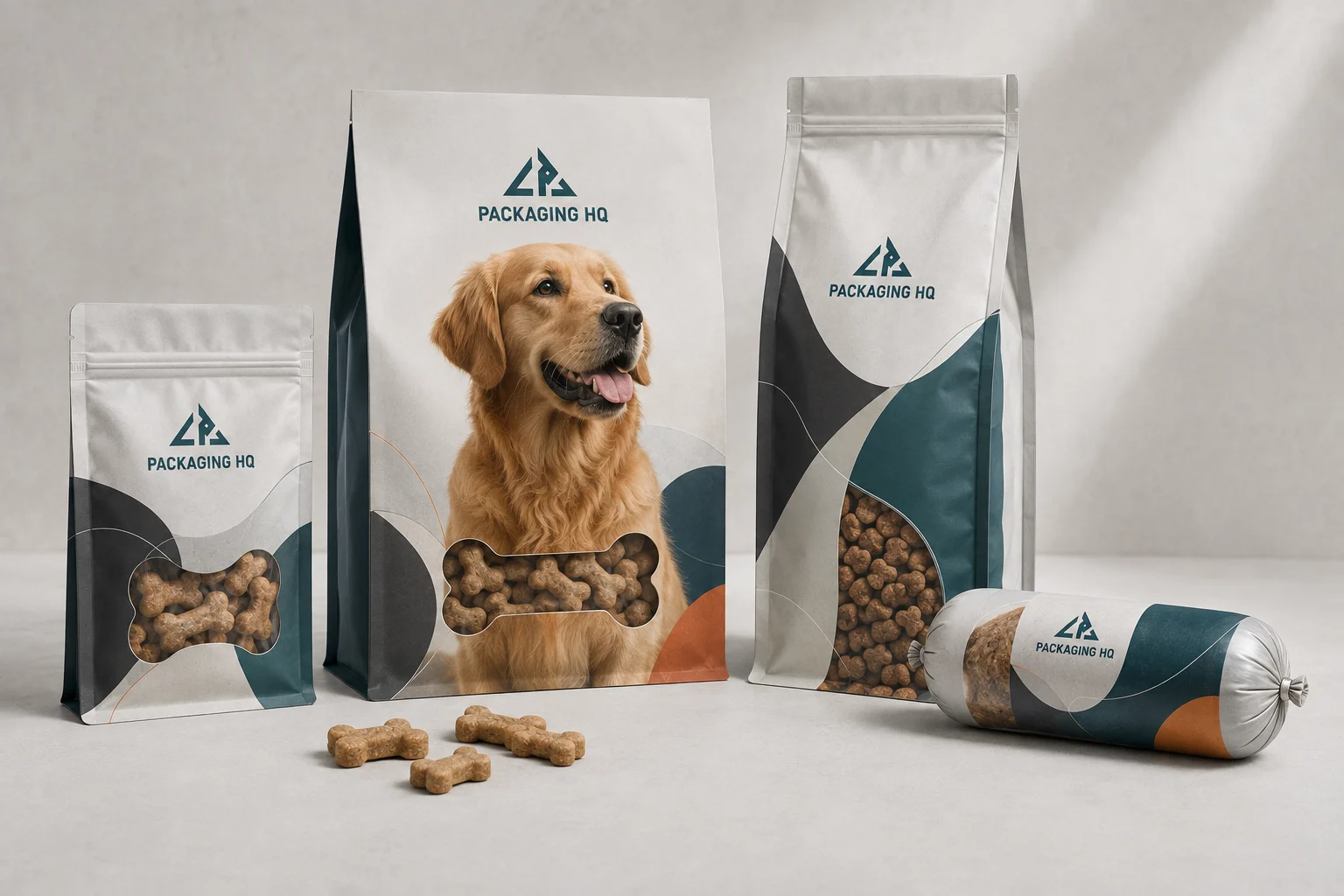
The best format depends on the treat, fill amount, product shape, oils, aroma, barrier needs, closure, filling process, and selling channel. Stand-up and flat-bottom pouches are common, but lay-flat, box, side-gusset, and other formats may be a better fit for a specific application.
When should a brand use a stand-up, flat-bottom, quad-seal, or side-gusset pouch?02
Stand-up pouches work across many sizes. Flat-bottom and box pouches provide a stable base and multiple graphic panels. Quad-seal and side-gusset bags can support larger fills and a different finished shape. Product volume, filled weight, filling, closure, case packing, and shelf presentation should guide the choice.
What barrier does dry pet food need?03
There is no single target for every dry pet food. Ingredients, fat content, aroma, processing, package size, expected freshness, storage, and distribution can affect oxygen, moisture, light, grease, and aroma requirements. Seals, closures, and package durability also affect the finished result.
Why is moisture barrier important for freeze-dried pet food?04
Freeze-dried pet food can be especially sensitive to moisture after processing. The package may need to limit moisture exposure while also accounting for oxygen sensitivity, product shape, puncture risk, storage, and repeated opening.
Can Packaging HQ provide retort packaging for pet food?05
Yes. Retort packaging must be developed around the product, film structure, seals, package format, fill conditions, thermal process, equipment, and distribution requirements. The completed package and process require appropriate production validation.
What is chub film used for?06
Chub film is formed around dense or ground products and closed to create a compact package. The film and closure must work with the product, filling process, refrigeration, freezing or thermal processing, package size, and handling requirements.
How should refrigerated pet food packaging be selected?07
The package should be reviewed around filling, sealing, cold storage, transportation, retail handling, and use in the home. Product moisture and oils, leakage risk, cold-temperature performance, opening, reclosing, and portioning can all affect the final specification.
How can packaging odors and retained solvents affect pet products?08
Dogs rely heavily on scent, so the finished package should not contribute a noticeable off-odor. Films, inks, coatings, adhesives, drying, and curing should be controlled. Retained solvents can be evaluated when appropriate, and the structure may also need to contain product aroma or limit outside odors.
What packaging changes are needed for DTC or subscription delivery?09
Parcel delivery can introduce drops, compression, vibration, changing temperatures, and unpredictable package orientation. The primary package, closure, seals, shipping case, filled weight, headspace, and number of packages in the shipment should be reviewed as one delivery system.
Can pet food film seal through crumbs, powder, or oils?10
Films can be developed with sealants selected around the expected filling conditions and level of contamination. The sealant, package headspace, filling process, jaw conditions, and actual product should be evaluated together and confirmed during production testing.
Can Packaging HQ work directly with a pet food co-manufacturer?11
Yes. With the brand's approval, Packaging HQ can work directly with the co-manufacturer or production team to confirm equipment, dimensions, package specifications, filling and sealing requirements, processing conditions, and production trials.