

Treating outside dimensions as usable fill dimensions
Packaging format
Lay-Flat / 3-Side-Seal Pouches
Lay-flat and 3-side-seal pouches use material efficiently and can be tailored for one-time use, resealability, hanging display, or high-barrier protection. Seal geometry and opening experience should be considered alongside the product and filling process.
PROJECT FOCUSSmall formats leave little room for sizing or seal errors.
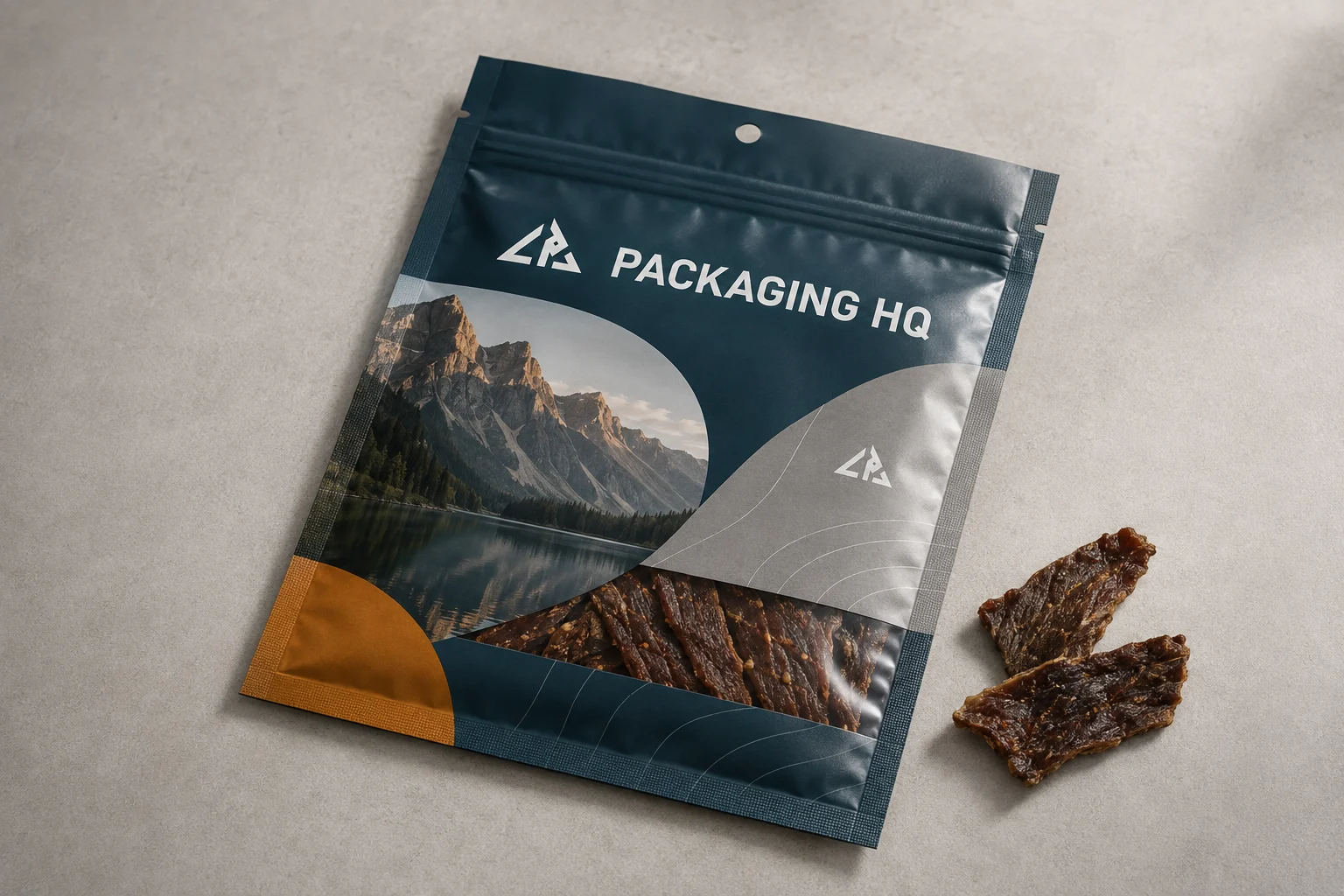
A compact flat pouch can work well for jerky, samples, single-use products, refills, and other space-conscious applications.
What the specification must resolve
What to confirm before production.
In a lay-flat pouch, finished dimensions, seal widths, tear location and fill area are closely connected. A compact package can perform well when opening, dosing, filling and burst requirements are resolved before finalizing the dieline.
Key considerations
- Seal widths and usable fill area
- Manual, semi-automatic or automated filling
- Easy-open, resealable or tamper-evident features
- Puncture and flex-crack resistance
Common applications
- Samples and trial sizes
- Jerky and confections
- Nutraceuticals
- Refills and accessories
Where projects go off track
Confirm these details early.
Underestimating seal contamination from powders, crumbs or liquids
Adding an easy-open feature without checking tear direction and toughness
01Product, fill and performance target
02Filling line, dimensions and material inputs
03Samples, trials, graphics and final approval
A common question
What is the difference between a lay-flat and a 3-side-seal pouch?
The terms often overlap. A 3-side-seal pouch is typically sealed on three sides and filled through the fourth. Confirm the final construction, seal geometry and filling method with the packer.
Continue the project
Connected packaging decisions
Let’s solve it together
Ready to discuss Lay-Flat / 3-Side-Seal Pouches?
Share the product, production details, and decisions you already have. We’ll focus on what is still open.