

Selecting from outside dimensions without confirming usable fill area
Packaging format
Stand-Up Pouches
Stand-up pouches combine strong shelf presence with practical handling. Product protection, fill method, target weight, consumer use, distribution, and the production environment should determine the pouch size and structure.
PROJECT FOCUSA pouch is only standard until the product and filling process enter the picture.
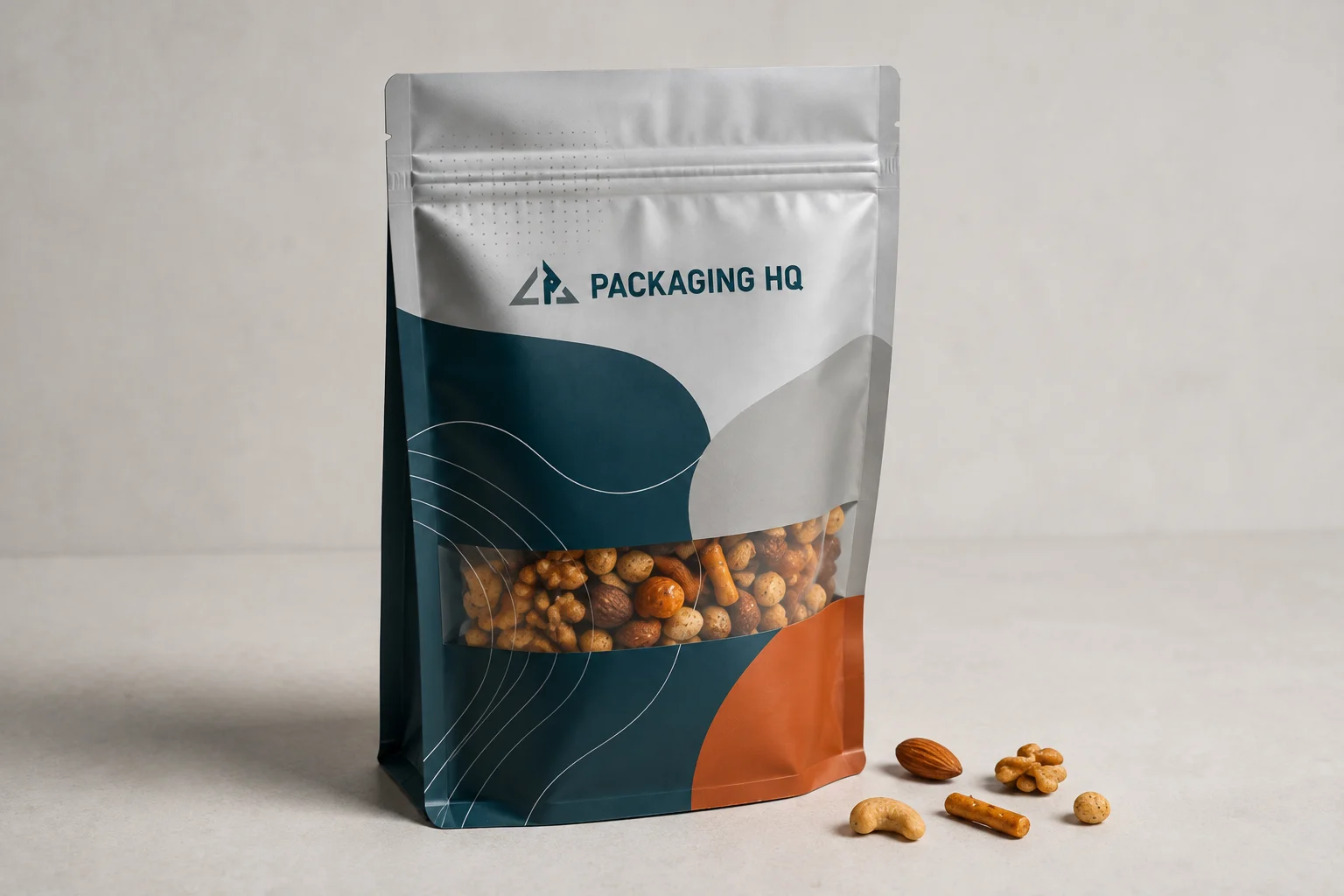
A bottom gusset helps the pouch stand, while the zipper, window, film, and size can be developed around the product and filling process.
What the specification must resolve
What to confirm before production.
Fill density changes usable volume. Headspace affects zipper and top-seal placement. Bottom style affects stability, filling and case packing. Those details should be settled together before artwork is built around a nominal size.
Key considerations
- Bottom style, fill volume, density and required headspace
- Zippers, tear notches, valves, windows and hang holes
- Moisture, oxygen, aroma, light and grease barrier
- Sealant selection and filling-line conditions
Common applications
- Supplements and powders
- Snacks and confectionery
- Pet treats
- Coffee and wellness products
Where projects go off track
Confirm these details early.
Placing zippers, tear notches or artwork before headspace and top seal are known
Choosing barrier by habit instead of product sensitivity and shelf-life target
01Product, fill and performance target
02Filling line, dimensions and material inputs
03Samples, trials, graphics and final approval
A common question
Can Packaging HQ help determine the pouch size?
Yes. Useful inputs include fill weight or volume, density, filling method, required headspace, bottom style, closure, shelf presentation and any co-manufacturer constraints.
Continue the project
Connected packaging decisions
Let’s solve it together
Ready to discuss Stand-Up Pouches?
Share the product, production details, and decisions you already have. We’ll focus on what is still open.